Water Treatment, Wastewater, Pool
Cationic Polyelectrolyte
🧪 What Is Cationic Polyelectrolyte? What Is It Used For? Key Properties Explained
1. Definition
Cationic polyelectrolytes are high molecular weight polymers containing positively charged functional groups. These polymers are designed to interact with negatively charged particles in aqueous solutions, facilitating processes such as coagulation, flocculation, sedimentation, and sludge dewatering. They are essential in biological wastewater treatment, industrial water clarification, and solid-liquid separation systems.
2. Chemical Identity & Physical Properties
Property | Specification |
|---|---|
Chemical Name | Cationic Polyelectrolyte |
CAS Number | 9003-05-8 |
Synonyms | Polyacrylamide, PAM, Poly(2-propenamide), Poly(1-carbamoylethylene) |
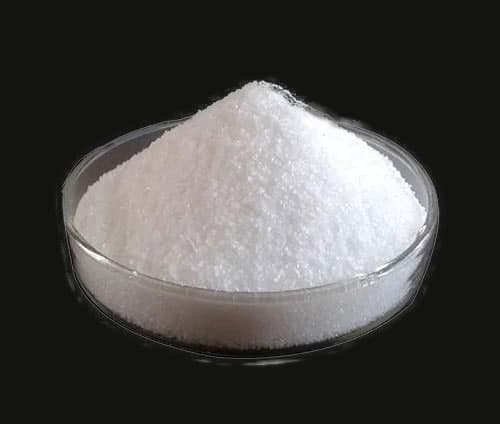
Appearance | White crystalline powder |
Odor | Odorless |
Melting Point | 246–250 °C |
Solubility | Soluble in water, alcohol, and polar solvents |
pH (in solution) | Neutral |
Packaging | 25 kg polyethylene bags |
3. Mechanism of Action
Cationic polyelectrolytes operate via electrostatic attraction. Their positively charged polymer chains bind to negatively charged colloidal particles in water, destabilizing them and promoting aggregation into larger flocs. These flocs settle faster and can be mechanically separated using centrifuges, belt presses, or filter presses.
Key Steps:
Adsorption: Polymer attaches to particle surfaces.
Flocculation: Particles cluster into larger, heavier flocs.
Coagulation: Flocs settle or float depending on density.
Dewatering: Water is removed from sludge via mechanical systems.
4. Industrial Applications
Sector | Application |
|---|---|
Wastewater Treatment | Sludge dewatering, biological sludge separation |
Drinking Water | Clarification, colloidal removal |
Paper Industry | Fiber bonding, water retention, brightness enhancement |
Textile Industry | Dye fixation, fabric softening, fiber alignment |
Mining | Ore separation, flotation residue clarification |
Petroleum Industry | Oil-water separation, process water treatment |
Cosmetics & Personal Care | Hair conditioning, anti-static effect, styling support |
5. Application Guidelines
Dilution Range: Typically 0.05–0.1%
Stock Solution: Prepared at 0.5% concentration
Dosage Optimization: Determined via jar testing and pilot trials
Injection Point: Static mixer or pressurized sludge line
Compatible Equipment: Centrifuge, belt press, filter press
6. Advantages
⚡ Highly effective flocculation
💧 Improved water clarity and quality
💸 Low dosage, high performance
🔄 Versatile across water chemistries
🧪 Fast solubility and easy handling
🌱 Supports environmental compliance
7. Comparison: Cationic vs Anionic Polyelectrolytes
Feature | Cationic Polyelectrolyte | Anionic Polyelectrolyte |
|---|---|---|
Charge Type | Positive | Negative |
Target Pollutants | Organic, biological | Inorganic, suspended solids |
Typical Use | Sludge dewatering | Chemical precipitation |
pH Compatibility | Neutral to acidic | Neutral to alkaline |
Dosage Range | 0.5–5 ppm | 1–10 ppm |
8. Conclusion
Cationic polyelectrolytes are indispensable in biological wastewater treatment and sludge management. Their ability to bind and neutralize negatively charged particles makes them ideal for floc formation and water clarification. When applied correctly, they enhance operational efficiency, reduce chemical consumption, and support sustainable water treatment practices.
📊 Sectoral Suitability – Cationic Polyelectrolyte
🏭 Industry / Sector | ✅ Suitability | ⚙️ Application Description |
|---|---|---|
Municipal Wastewater Treatment | ✅ Full Match | Sludge dewatering, biological sludge separation |
Industrial Wastewater Treatment | ✅ Full Match | Organic pollutant removal, sludge conditioning |
Drinking Water Treatment | ✅ Partial Match | Clarification of colloidal particles |
Paper & Pulp Industry | ✅ Full Match | Fiber bonding, water retention, brightness enhancement |
Textile Industry | ✅ Full Match | Dye fixation, fabric softening, fiber alignment |
Mining Industry | ✅ Full Match | Flotation residue clarification, ore separation |
Petroleum Industry | ✅ Full Match | Oil-water separation, process water treatment |
Cosmetics & Personal Care | ✅ Partial Match | Hair conditioning, anti-static effect |
Food Industry | ⚠️ Limited Use | Requires food-grade certification |
Concrete & Construction | ⚠️ Limited Use | Nonionic or anionic polymers preferred |
🔒 Mandatory Use Cases – Cationic Polyelectrolyte
⚙️ Process / Application Area | 🔒 Mandatory Use | 📌 Justification |
|---|---|---|
Biological Sludge Dewatering | ✅ Required | Essential for floc formation in centrifuge, belt press, and filter press systems |
Activated Sludge Separation | ✅ Required | Enables efficient solid-liquid separation in biological treatment plants |
Municipal Sludge Handling | ✅ Required | Used in pressurized sludge lines for conditioning and water removal |
Paper Fiber Retention | ✅ Required | Enhances fiber bonding and improves paper strength and uniformity |
Textile Dye Fixation | ✅ Required | Stabilizes dyes and improves fabric softness and elasticity |
Mining Flotation Residue Treatment | ✅ Required | Facilitates settling of fine particles post-flotation |
Oil-Water Separation in Petroleum | ✅ Required | Breaks emulsions and accelerates phase separation |
Jar Testing for Polymer Selection | ✅ Required | Lab-based optimization is essential for correct polymer dosing and performance |
🧪 Other Names & Synonyms – Cationic Polyelectrolyte
Category | Names / Variants |
|---|---|
Chemical Identity | Cationic Polyelectrolyte, Polyacrylamide |
Abbreviations | PAM, CPAM |
IUPAC Variants | Poly(2-propenamide), Poly(1-carbamoylethylene) |
Functional Labels | Sludge Conditioner, Dewatering Polymer, Cationic Flocculant |
Commercial Labels | CPAM Powder, CPAM Emulsion, Cationic PAM |
CAS Reference | CAS No: 9003-05-8 |
Global Trade Terms | Cationic Polyacrylamide, Cationic Polymer, Water Treatment Polymer |
Quality Guarantee
ISO 9001 certified production standards.